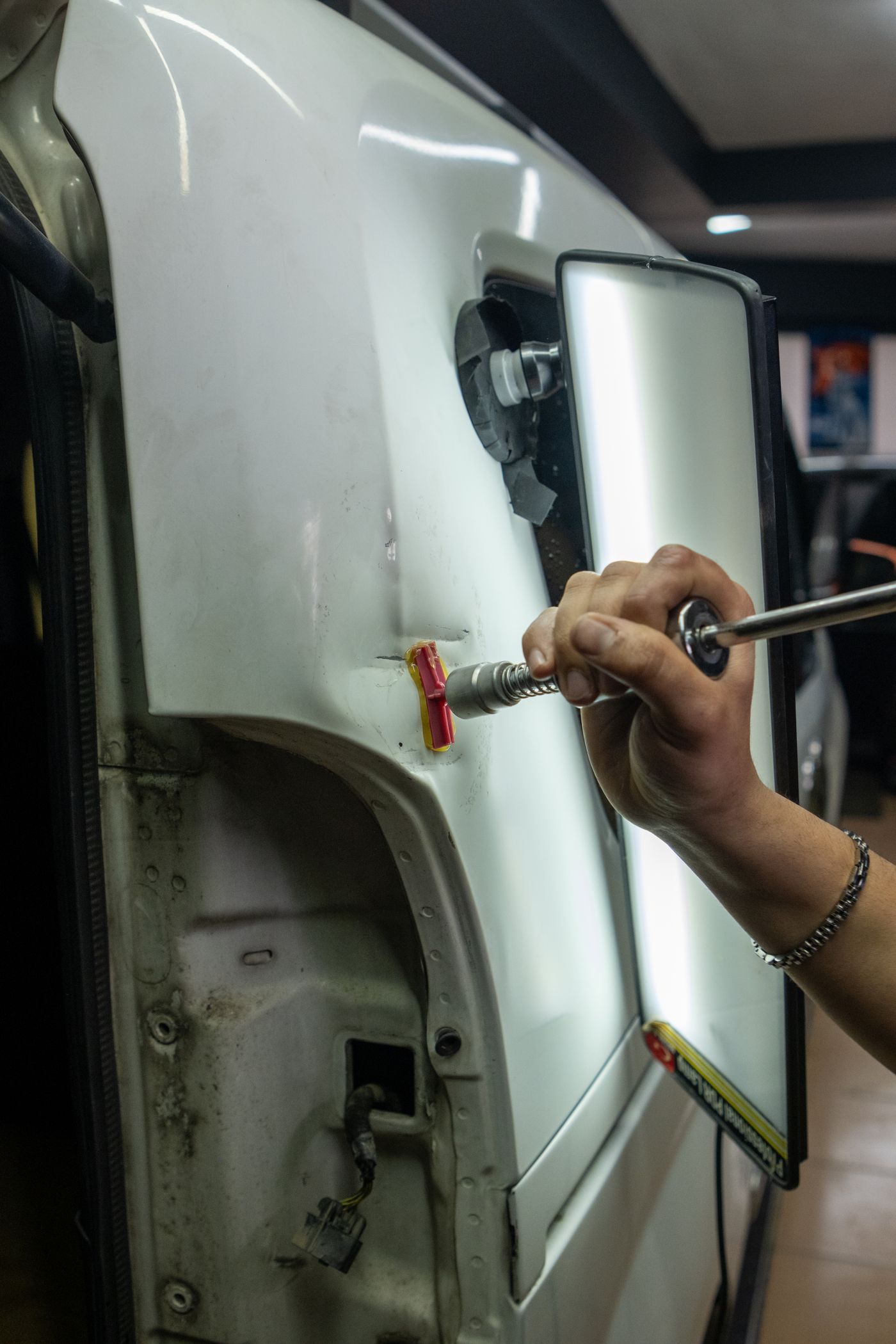
Enquire about paintless dent removal, door dings, parking dents and minor panel damage in Peterborough. Suitability depends on inspection.
01Small parking dents vary in depth, location and access behind the panel. Photograph the panel from several angles with a straight reflected line if possible. Record paint damage and dent size; access, metal shape and panel construction can affect whether paintless work is suitable.
Read guide →02List the number and affected panels. Suitability must be assessed individually. Count affected panels and approximate dents rather than assuming every mark is the same. A specialist can assess paint condition, access and the extent of damage before selecting a repair approach.
Read guide →03Sharp creases can be more complex than shallow rounded dents. A sharp crease can stretch metal and be more difficult than a broad shallow dent. Provide images of the whole panel and its edges, and allow for a different repair method if inspection shows it is needed.
Read guide →04Edges and internal reinforcements may limit access and the choice of method. Show the distance from the dent to a seam, fold or panel edge. Internal reinforcement can prevent straightforward access; the correct approach depends on actual vehicle construction and specialist assessment.
Read guide →05Cracking or flaking may rule out a paint-preserving approach. Look for visible cracks, flaking, chips and previous paint touch-ups. If the finish is damaged, a paint-preserving technique alone may not resolve the problem or produce an acceptable result.
Read guide →06Identify vehicle and panel material where known; repair methods can differ. Provide the make, model, year and specific affected panel. Different materials behave differently and some manufacturer repair procedures restrict methods; request a suitably skilled assessment.
Read guide →07Photograph the dent in reflected light and show surrounding marks. Keep a written and photographic record of the damage and any other marks. Distinguish paint loss from a shallow deformation and avoid attempting an improvised repair before specialist inspection.
Read guide →08Compare against the actual condition standard before agreeing cosmetic work. Check the actual lease return condition criteria and identify each dent independently. Ask for the proposed repair scope and likely result in writing before committing to work.
Read guide →09Filler or refinished paint may affect whether a paintless method is suitable. Tell the specialist about any known filler, repainting or body repairs. Previously worked panels may behave differently, and a conservative approach may be preferable to risking the existing finish.
Read guide →010Photographs can guide an initial review, but do not replace a suitable inspection. Photographs can guide a provisional discussion but may not reveal panel access, paint condition or stretched metal. Confirm the actual method, price and reasonable outcome after a suitable inspection.
Read guide → Every quote depends on the vehicle, suitable provider and actual scope. No unverified qualification or outcome is claimed.